ABOUT
Fitcheck is a personal wardrobe and styling app with a companion browser extension. Users photograph the clothes they already own to build a digital closet, receive outfit suggestions for any occasion, and — while shopping online — get an instant second opinion on whether a new item is worth buying. It was developed as a portfolio project, taken from concept through to a working prototype.
THE PROBLEM
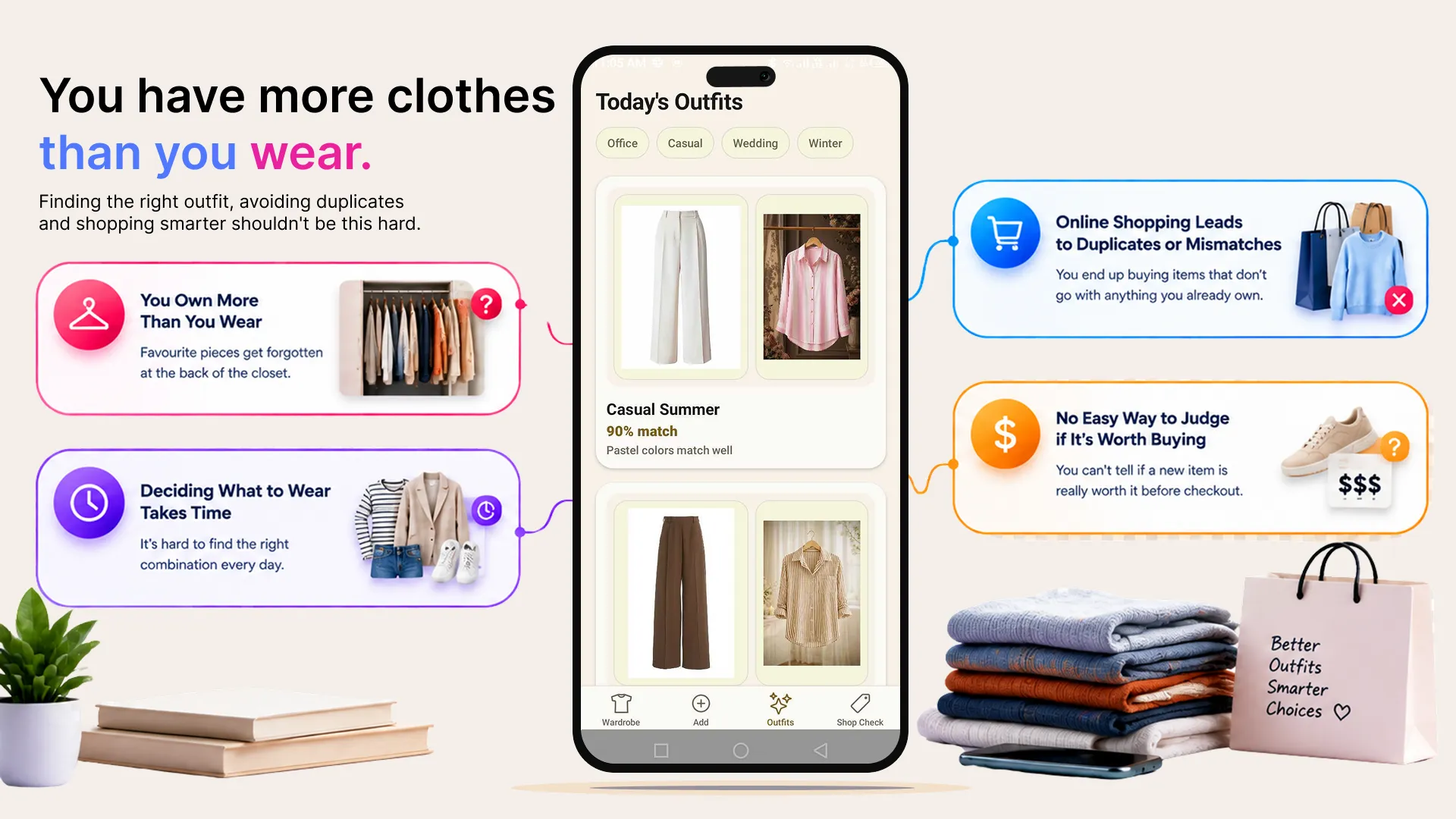
Most people wear a fraction of what they own. Favourite pieces sit at the front of the closet and everything else is quietly forgotten, so a full wardrobe still produces the daily feeling of having nothing to wear — and deciding what to put on takes time and energy every morning.
Online shopping makes it worse rather than better. Product pages sell an item on its own merits, with no reference to what the shopper already has at home. The result is duplicate purchases — a third striped shirt almost identical to two already hanging up — and mismatched ones that pair with nothing owned. At the moment of checkout, when the decision is actually being made, the shopper has no way to check either.
THE SOLUTION
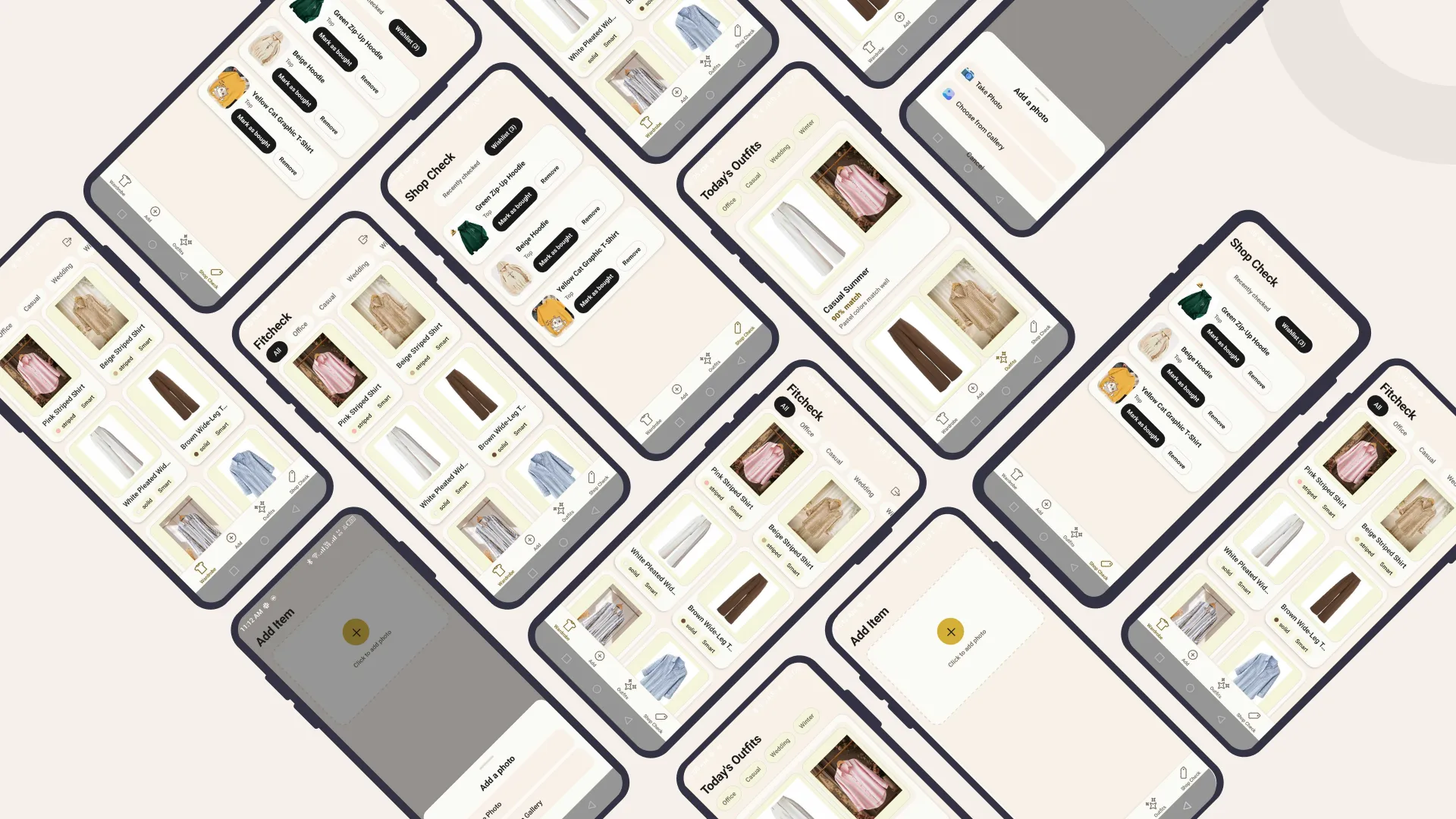
We built Fitcheck around four tabs — Wardrobe, Add, Outfits and Shop Check — plus a browser extension that follows the user out onto shopping sites.
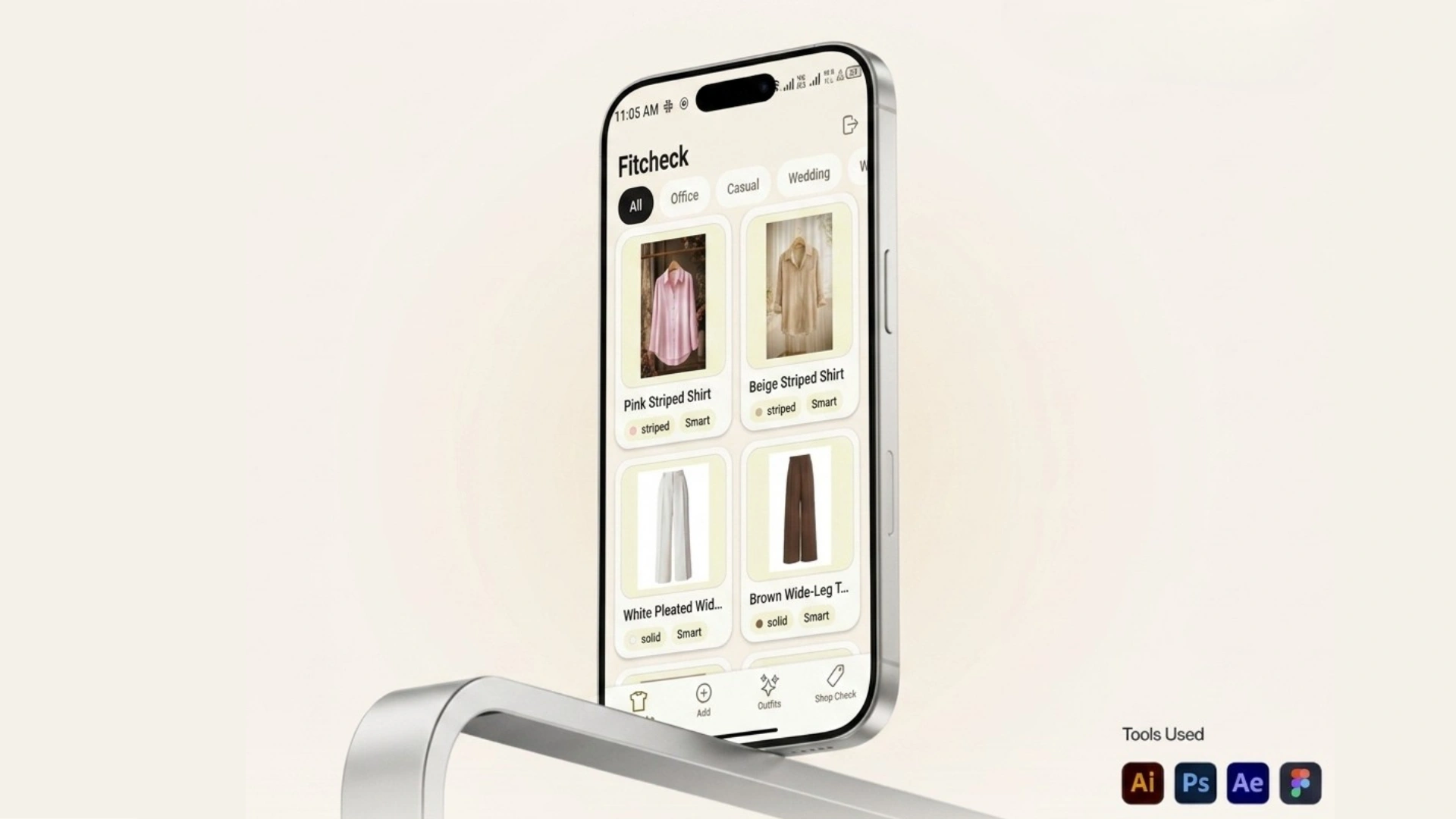
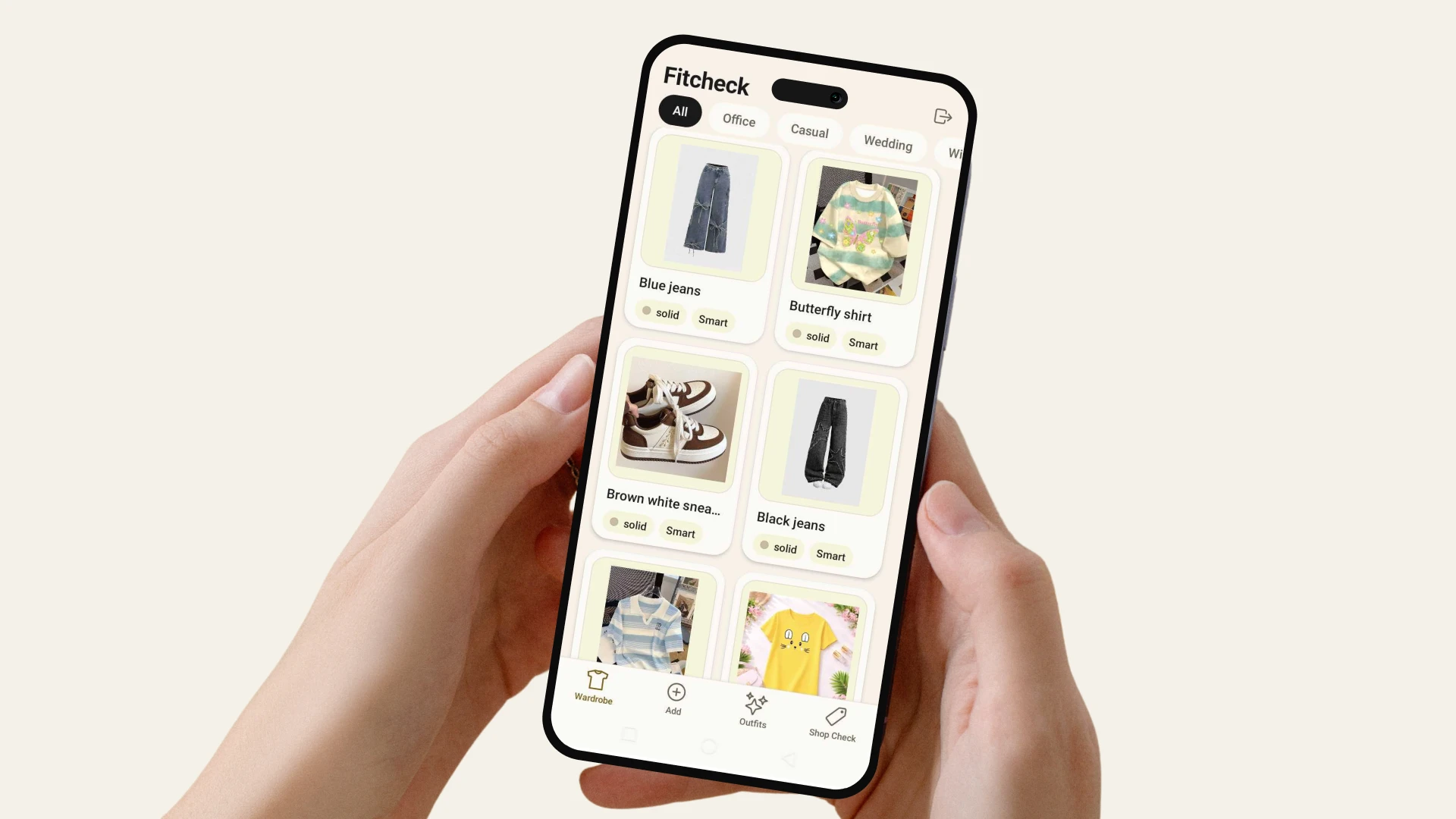
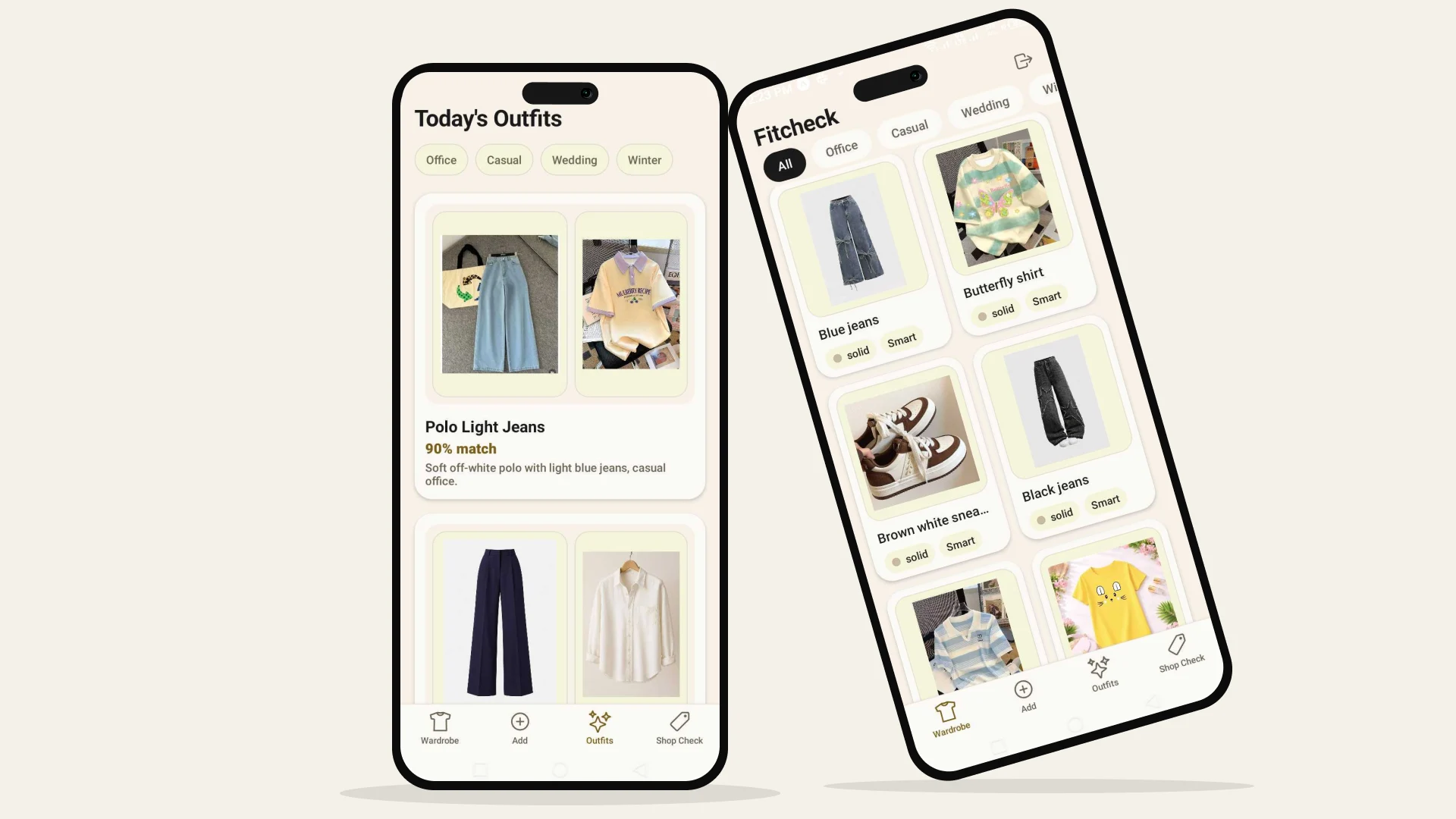
Building the wardrobe. Adding an item takes seconds: take a photo or pick one from the gallery. Each piece is then organised automatically — sorted into a category such as Top and tagged by pattern (striped, solid) and style (Smart). Because tagging happens automatically rather than through a form the user fills in, the closet actually gets built — and stays searchable, with occasion filters for Office, Casual, Wedding and Winter.
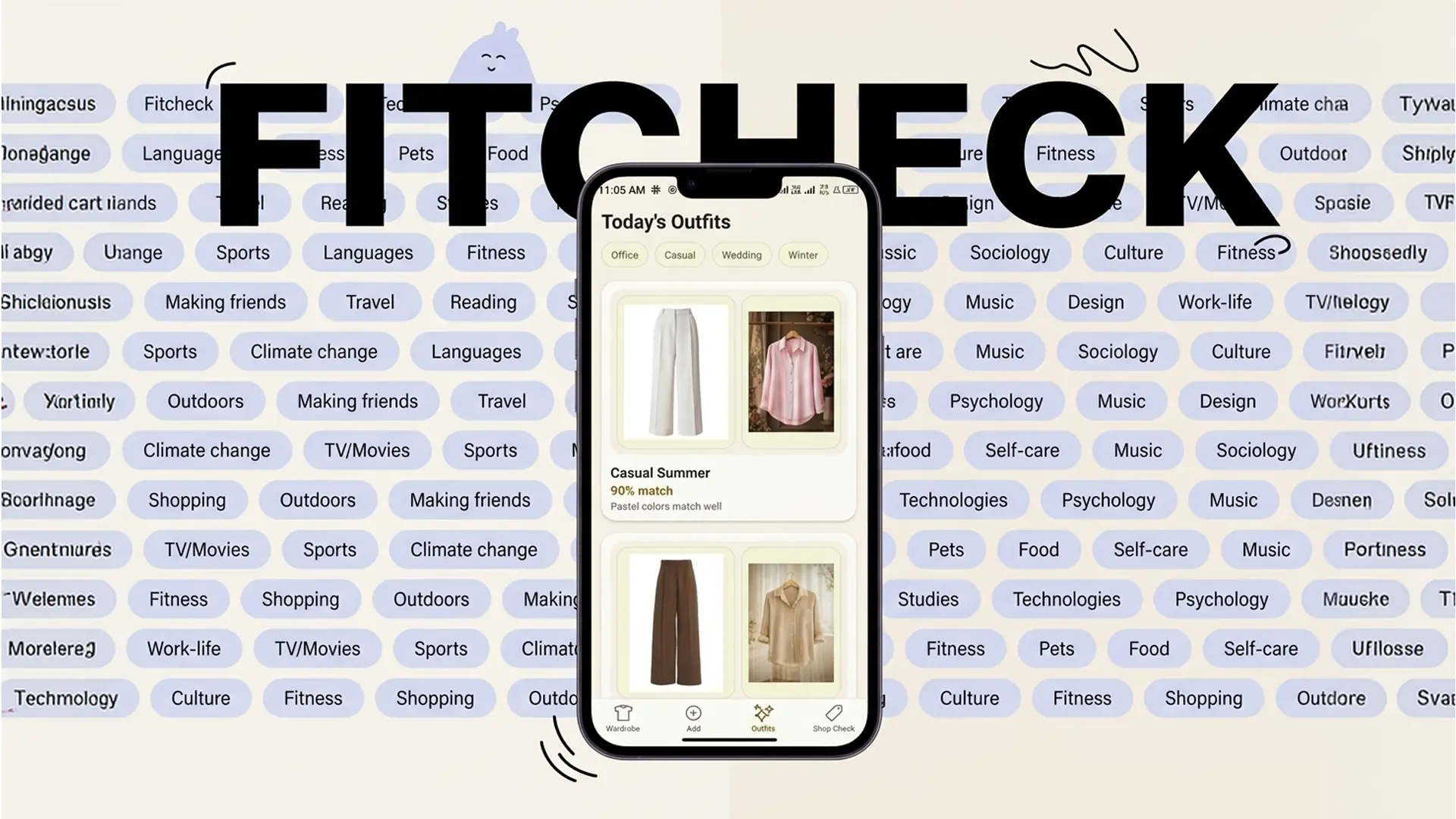
Suggesting outfits. The Outfits tab assembles complete looks entirely from pieces the user owns. Every suggestion carries a match score and a short reason for the pairing — “Pastel colours match well” — so the recommendation can be judged rather than simply accepted, and results can be filtered by occasion.
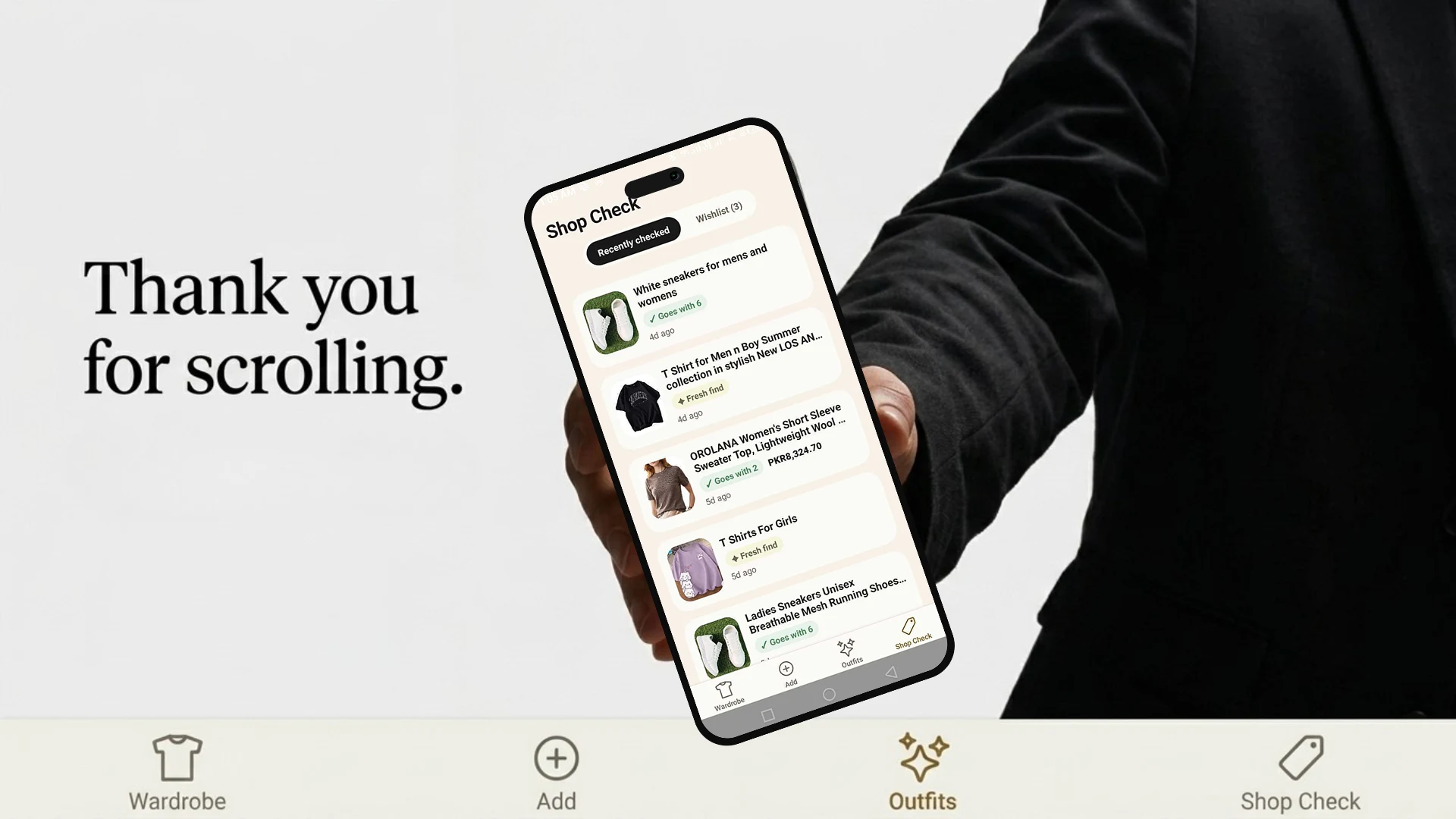
Checking a purchase. This is where the AI does its most useful work. As the user browses any shopping site, the extension reads the item on screen, compares it against their wardrobe in real time, and returns one of three verdicts: a fresh addition when nothing similar is owned and nothing yet pairs with it; goes with what you already own, naming how many pieces it matches and showing them; or you already own something similar, the duplicate-purchase guard, which still notes what the item pairs with rather than simply saying no.
Everything scanned flows into Shop Check, where a Recently checked log keeps each item with its verdict, and a Wishlist holds saved pieces that can be marked as bought — moving them into the wardrobe — or removed.
THE OUTCOMES
Fitcheck turns a wardrobe from a pile of clothes into something the user can actually see and use. Automatic categorisation keeps the effort of adding an item down to a photograph, and outfit suggestions turn getting dressed into a choice between options rather than a search.
The extension is where the value becomes concrete. A shopper about to buy their third near-identical item is told so before checkout, and one hesitating over a piece is shown exactly how many things they already own that it works with. The verdicts are honest in both directions — the app is as willing to greenlight a purchase as to warn against one, which is what makes the warnings credible.
The project shows our ability to apply AI where it changes a decision: image understanding to remove data entry, and personal-context matching to give a useful answer at the moment of purchase.