

ABOUT
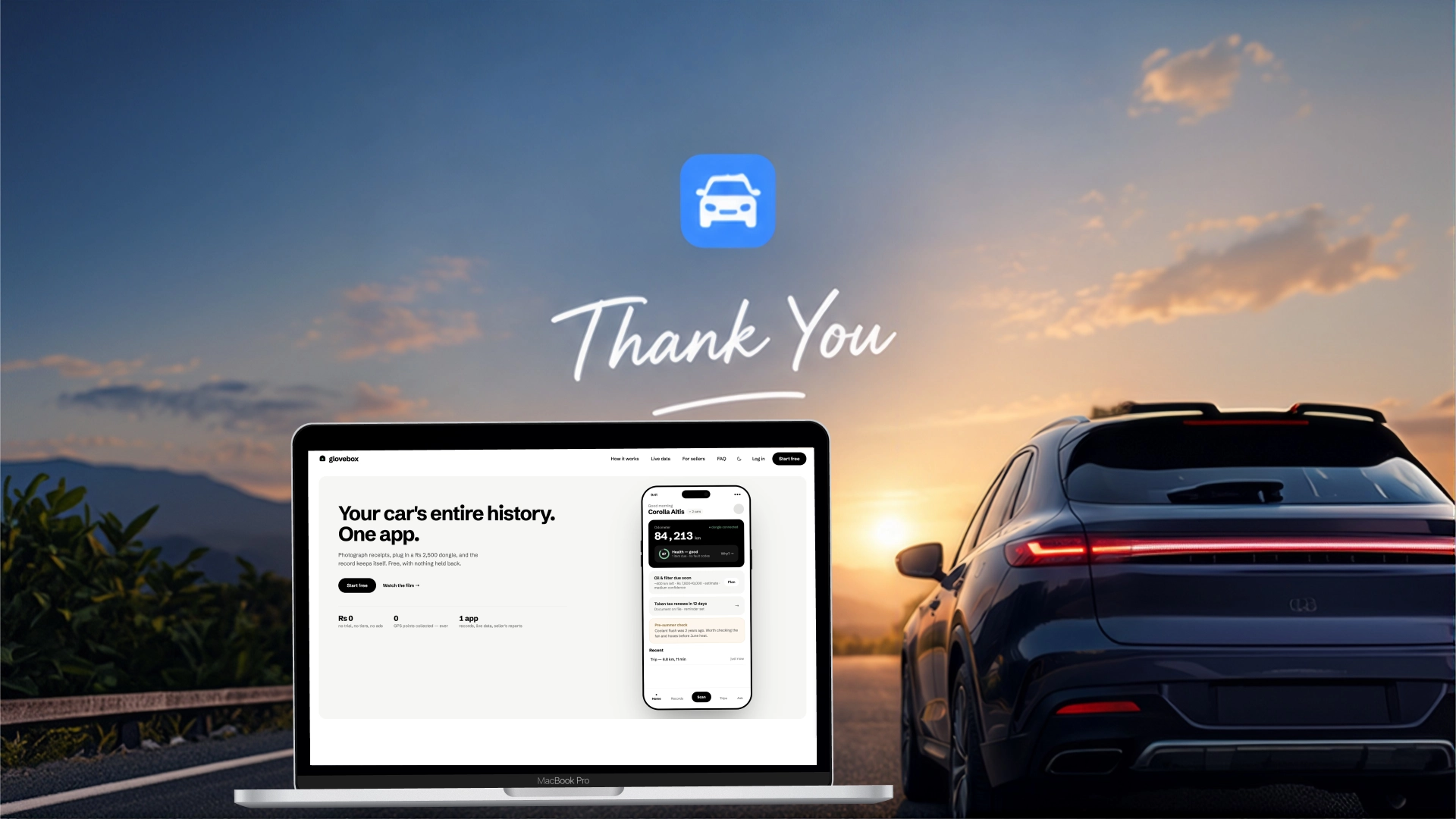
Glovebox is a vehicle history platform for everyday car owners, delivered as a web dashboard and a mobile application. It gives owners a complete, trustworthy record of their car — service history, documents, expenses and reminders — without the manual data entry that makes traditional car-log apps fail. The product is built for markets where service records live on paper: the owner photographs a workshop receipt, AI reads and files it, and the record builds itself. We designed and delivered the complete product, live at glovebox.desolint.com.
THE PROBLEM
Car owners do not keep records because keeping records is work. Every service visit produces a paper receipt that would need to be read, typed into an app and filed, and after two or three attempts most people stop. Existing car-log apps fail for exactly this reason: they ask for data entry the owner will never sustain.
The consequences arrive later. Renewals are discovered through a fine. Maintenance decisions rely on memory — when was the last oil change, and at what mileage? And at selling time the owner has nothing verifiable to show a buyer, so a well-maintained car is worth no more than a neglected one.

THE SOLUTION
We built Glovebox so the record is a by-product of photographing paperwork rather than a task in its own right.
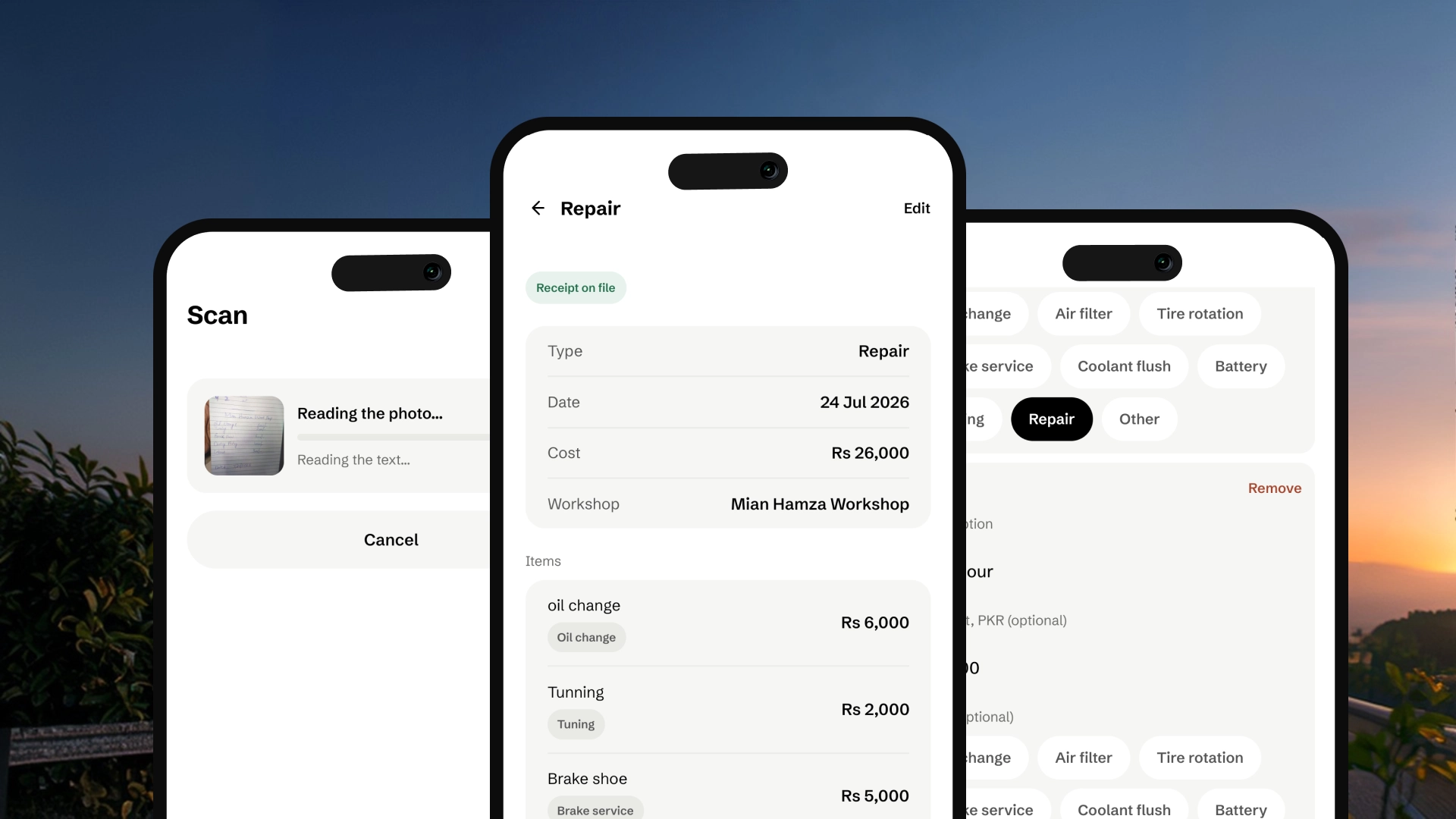
Reading receipts. The owner photographs a workshop receipt and AI vision extracts the date, workshop name, line items, cost and odometer reading — including handwritten entries. The owner confirms what was read, and the record is filed with the receipt image permanently attached as proof.
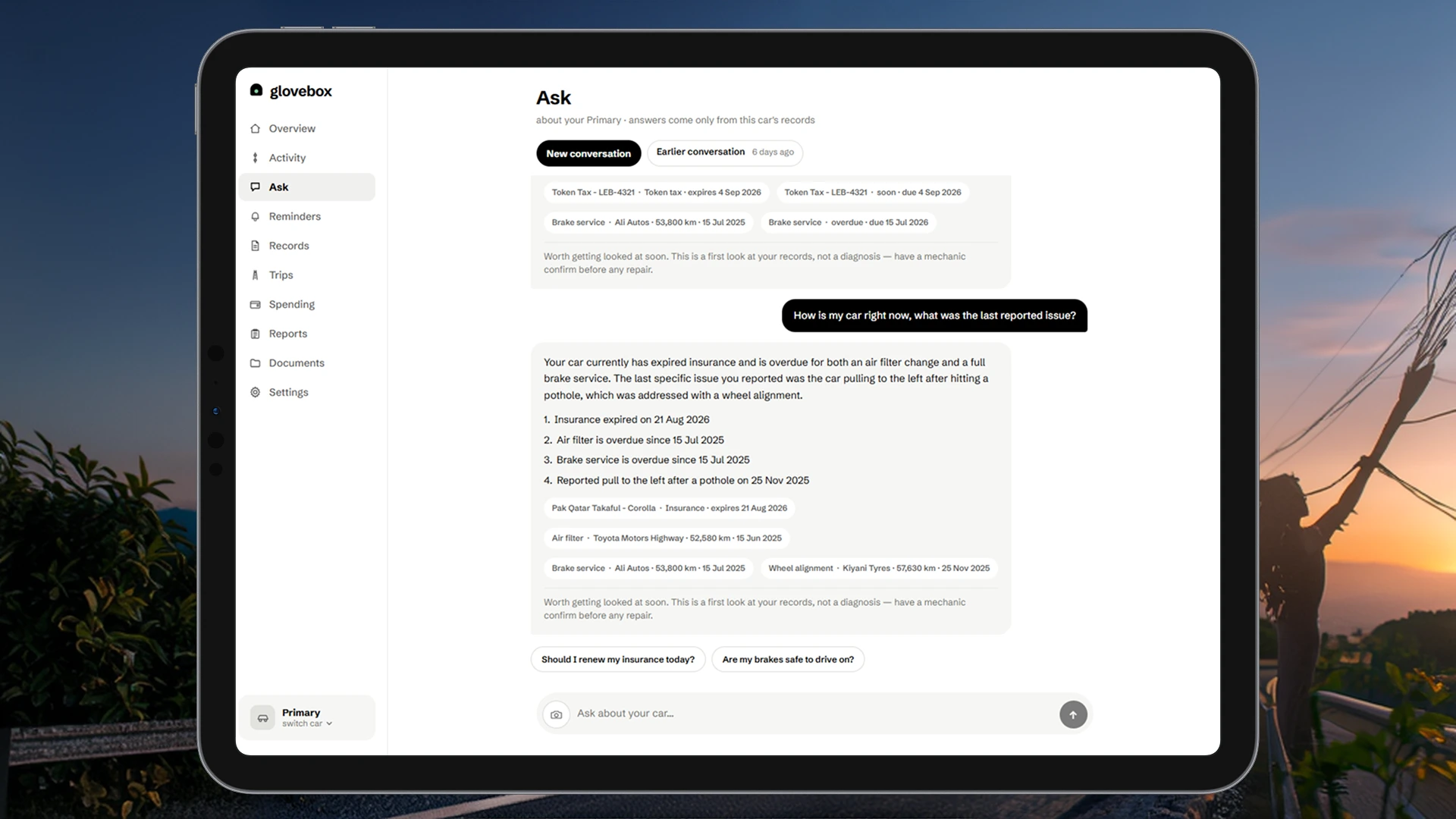
An assistant that cites its sources. Owners ask questions in plain English, Urdu or Roman Urdu — “when was my last oil change and what did it cost?” — and get answers drawn strictly from their own car’s records. Every answer carries citations linking back to the exact record it came from, and a strict server-side rule allows a price to be stated only when that exact figure appears in a cited record.
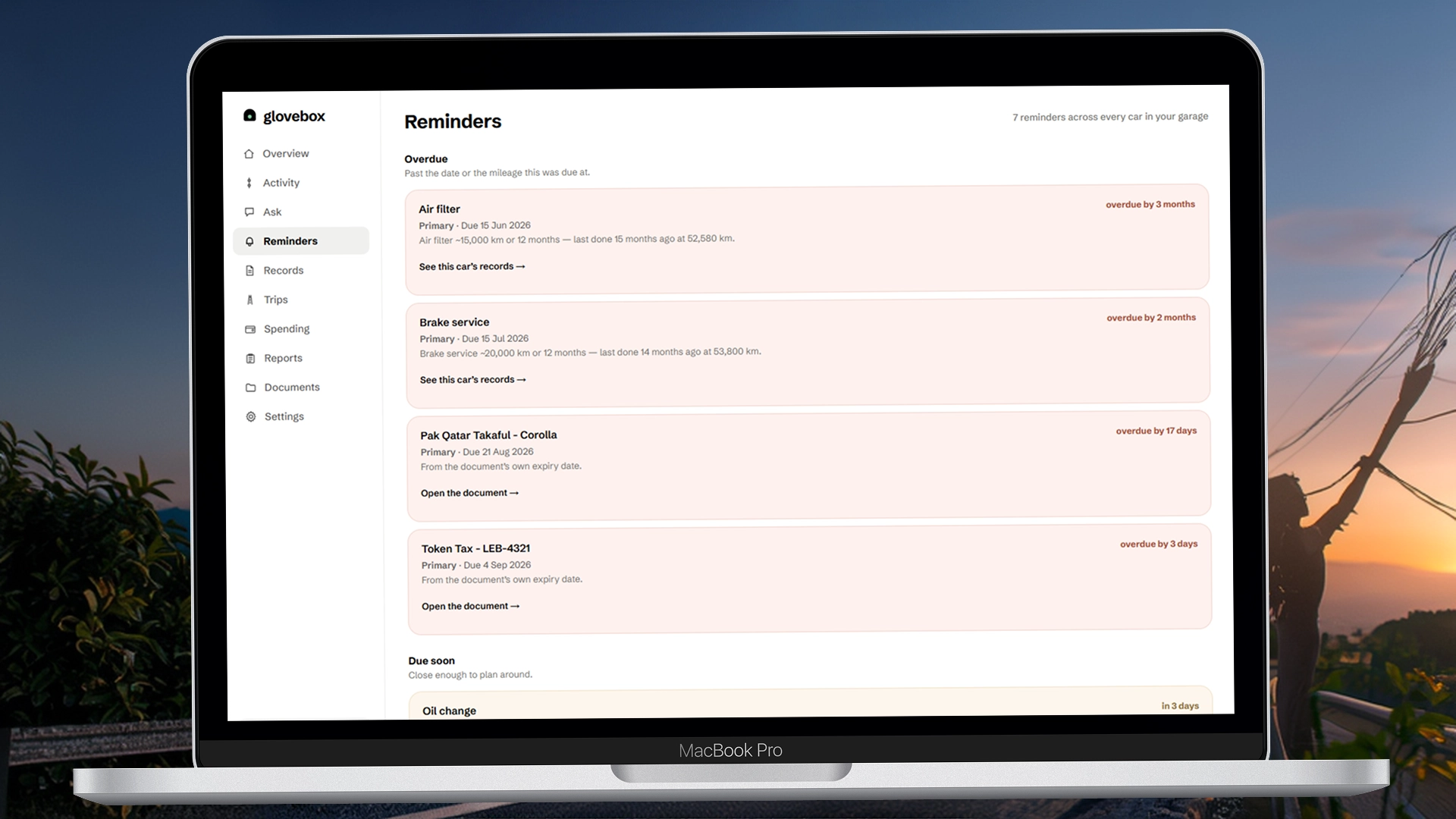
Reminders computed from the car’s own history. Because the platform knows when the last oil change happened and at what mileage, it can say when the next one is genuinely due — by date or distance, whichever comes first — rather than applying a generic schedule.
A document vault and spending insights. Registration books, insurance certificates and tax receipts sit in one vault, with expiry alerts 30 days ahead, 7 days ahead and on the day itself. Receipts and fuel fills roll up into a monthly picture of what the car costs; where there is not enough data for an honest figure, the dashboard says so rather than showing a misleading one.
The seller’s report. The signature feature. At selling time the owner generates a printable history in which every line states how it is known — “receipt on file” when the image is stored and verifiable, “self-reported” when it was typed in — with a headline percentage showing how much of the history is backed by evidence. Private costs are never included, each claimed receipt is verified to exist at the moment of generation, and the report declines to show a percentage when a car has too few records for the number to be meaningful.
On mobile, an inexpensive plug-in dongle adds live engine data — coolant temperature, battery voltage, fault codes and automatic trip logging — with distance calculated from the car’s own speed data, so the platform collects no location at all.
THE OUTCOMES
Glovebox removes the reason car records do not get kept. Owners photograph paperwork as it happens and the platform files, reminds, totals and reports. Renewals stop slipping through, maintenance stops depending on memory, and the car’s history becomes an asset the owner can hand a buyer with confidence.
Two design decisions carry most of that value. Confirm-before-save means real-world receipts — thermal-printed, crumpled, mixing English, Urdu and handwriting — do not need perfect automated accuracy, because the AI reads and the owner spends two seconds checking. And grounding every answer and price in a cited record keeps the assistant trustworthy in a product about money and safety.
The project demonstrates our ability to combine document vision with a records-grounded assistant, and to ship a complete production product — web, mobile, backend and AI pipeline — designed around what actually stops people using it.